
Following the February 2026 vote of confidence, Kosovo Parliament ended months of political paralysis by approving a new government led by Prime Minister Albin Kurti. The outcome has restored a sense of political continuity and handed Pristina a renewed mandate to press ahead with economic diversification, broaden its diplomatic reach, and implement a €1 billion defense and stabilization plan. At the same time, Kosovo is fast-tracking alignment with European Union regulatory standards, an intentional push to unlock more than €800 million under the EU Growth Plan for the Western Balkans. Beyond Europe, Pristina is also recalibrating its foreign policy, cautiously expanding engagement with non-traditional partners to reduce structural overreliance on immediate European markets and build longer-term resilience.
Kosovo’s post-confidence political reset offers a telling contrast for Nepal, where policy continuity has remained stubbornly elusive. In Pristina, political stability is being treated as an economic asset—used to widen the productive base, align institutions with European Union standards, and gradually expand diplomatic space beyond immediate partners. Nepal’s challenge is less about conducting elections and more about what follows: whether democratic mandates can be translated into steady governance, credible reform, and an economy resilient enough to absorb global uncertainty.
That test is becoming more urgent as Nepal approaches a critical macroeconomic milestone. Its scheduled graduation from the United Nations’ Least Developed Country (LDC) category in November 2026 reflects real gains in human development and vulnerability indicators, but it also brings significant trade risks. Graduation will trigger a gradual rollback of duty-free and quota-free access under key Generalized System of Preferences (GSP) schemes. The International Trade Centre (ITC) estimates that while Nepal’s exports were expected to reach $1.37 billion by 2026, they could instead fall by 4.3 percent to about $1.31 billion – a loss of nearly $59 million – largely due to higher tariffs on apparel, carpets, and synthetic textiles.
In this evolving multipolar landscape, small states are increasingly compelled to move beyond rigid bloc alignments toward more pragmatic, need-based diplomacy. A closer Nepal-Kosovo partnership fits that logic. As landlocked economies facing distinct yet comparable structural constraints, both countries could explore new economic and diplomatic linkages that bridge the Himalayas and the Western Balkans. Such cooperation would not be symbolic; it would be a strategic recalibration aimed at diversifying markets, reducing external vulnerabilities, and asserting greater agency in a shifting global order.
Kosovo as a New Destination for Nepali Workers
Labor mobility stands out as the most immediate and mutually beneficial avenue for deeper bilateral engagement. Kosovo is grappling with acute domestic labor shortage, intensified since visa liberalization in January 2024 accelerated youth migration to Western Europe. Key sectors – including construction, hospitality, retail, and manufacturing – are facing widening workforce deficits that threaten productivity. In response, the Government of Kosovo has raised the national gross minimum wage to €425 from January 2026, with a further increase to €500 by July, while private employers in Pristina are offering auxiliary benefits like housing support, food allowances, and social insurance to retain and attract workers.
For Nepal, overseas employment remains central to macroeconomic stability. Remittance inflows rose sharply in early 2025/26, reinforcing the country’s dependence on foreign labor markets, particularly in the Gulf and Malaysia. While newer pathways to East Asia are emerging, Nepal remains exposed to concentrated regional risks. Though, Nepal has not yet recognized Kosovo, a formal labor corridor would provide Nepali workers with a regulated, European-standard destination. A bilateral labor MoU grounded in International Labour Organization (ILO) recruitment norms would help Pristina address demographic gaps without distorting local employment, while allowing Kathmandu to diversify labor destinations and secure more stable, higher-value remittance flows.
Tourism, Sports, and People-to-People Ties
Tourism offers one of the simplest and most human ways to connect beyond contracts and balance sheets. For Nepal, travel and hospitality have long been a lifeline, bringing foreign exchange, sustaining livelihoods, and carrying the image of the Himalayas to the world. European adventure travelers and mountaineers have been central to that story. In Kosovo, a similar narrative is taking shape. Nestled in the Western Balkans, Kosovo has leaned into eco-tourism, opening its dramatic landscapes – especially the Accursed Mountains (Bjeshkët e Nemuna) – to hikers seeking authenticity over crowds. Thoughtful, reciprocal promotion between Kathmandu and Pristina could nurture small but meaningful travel corridors, linking Himalayan expeditions with Balkan cultural routes and helping both countries broaden their post-pandemic tourism base.
Sport, too, speaks a universal language. Kosovo’s rapid rise after gaining recognition from the International Olympic Committee in 2014 – particularly in judo – has become a quiet source of national pride. Nepal’s strength lies elsewhere: in high-altitude endurance, mountain training, and rescue expertise shaped by some of the world’s harshest terrain. Bringing athletes, coaches, and young talents together through joint camps and exchanges would do more than improve performance; it would build friendships, shared discipline, and trust that outlast medals.
Perhaps the deepest bond lies with people who live far from home. Both nations know the ache and opportunity of migration. Kosovo’s experience of turning a large, historic diaspora into a source of investment and advocacy offers lessons for Nepal, where millions work abroad with hopes tied to remittances and eventual return. Learning from each other – how to protect workers’ rights, channel savings productively, and keep emotional ties alive – could turn distance into strength. In the end, it is these human connections, not formal agreements alone, that give lasting meaning to diplomacy.
Trade and Business Engagement
Distance has not prevented Nepal and Kosovo from sharing striking economic similarities. Both are landlocked, both depend heavily on small and medium-sized enterprises, and both draw strength from domestic consumption sustained by diaspora income. In Kosovo, SMEs are the backbone of private enterprise and exports. In Nepal, export resilience rests on cottage industries, light manufacturing, and high-value products – orthodox tea, specialty coffee, pashmina, and hand-knotted carpets – that already resonate with niche European consumers.
These complementarities extend naturally into trade. Kosovo’s output in processed base metals, construction materials, and its fast-growing ICT services sector offers cost-competitive options for South Asian supply chains. To turn this potential into transactions, the creation of a Kosovo-Nepal Joint Business Council (JBC) would be a practical first step. Anchored by bilateral chambers of commerce, such a platform could connect businesses directly, reduce information gaps, and ease logistical bottlenecks that often deter first-time traders.
The logic for closer engagement was underscored during a visit to Kathmandu in December 2025, when Kosovo’s Ambassaor to Dhaka Lulzim Pllana, noted that both countries face parallel development pressures and need the confidence to cooperate beyond familiar regional blocs. For Nepal, that urgency is sharpened by its scheduled graduation from the Least Developed Country (LDC) category in November 2026, a milestone that reflects progress but also exposes vulnerabilities. According to assessments cited by the National Planning Commission, the loss of duty-free and quota-free (DFQF) access under various GSP schemes could hit exports to the European Union and Turkey, particularly in apparel, synthetic textiles, and carpets.
In this context, deeper access to the Western Balkans through Pristina offers more than symbolism. For Nepal, it opens an alternative gateway into high-income European markets at a moment of transition. For Kosovar firms seeking room beyond saturated European demand, Nepal provides a bridge into South Asia’s vast consumer base of nearly two billion people. Framed this way, trade between the two is not an experiment, it is a shared search for resilience in a changing global economy.
Academic and Institutional Collaboration
Education has always been more than classrooms and rankings, it is about keeping talent rooted while opening minds to the world. In Kosovo, higher education has been steadily modernized with strong backing from the European Commission through Erasmus+ mobility programs. In Nepal, the University Grants Commission is under growing pressure to internationalize universities as a way to stem persistent academic brain drain and lift institutional credibility. Expanding cross-regional scholarships – well beyond traditional Non-Aligned Movement (NAM) routes – would not only retain young scholars but also deliver quiet yet meaningful diplomatic gains.
For Kosovo’s new leadership, engagement with Nepal offers a chance to practice a more grounded, need-based form of statecraft. Instead of rigid diplomatic habits, cooperation can be shaped around practical priorities like trade knowledge, technological transfer, climate resilience, and institutional links. It is a model that reflects how small states can remain agile and relevant in a fractured, multipolar world, without losing strategic clarity.
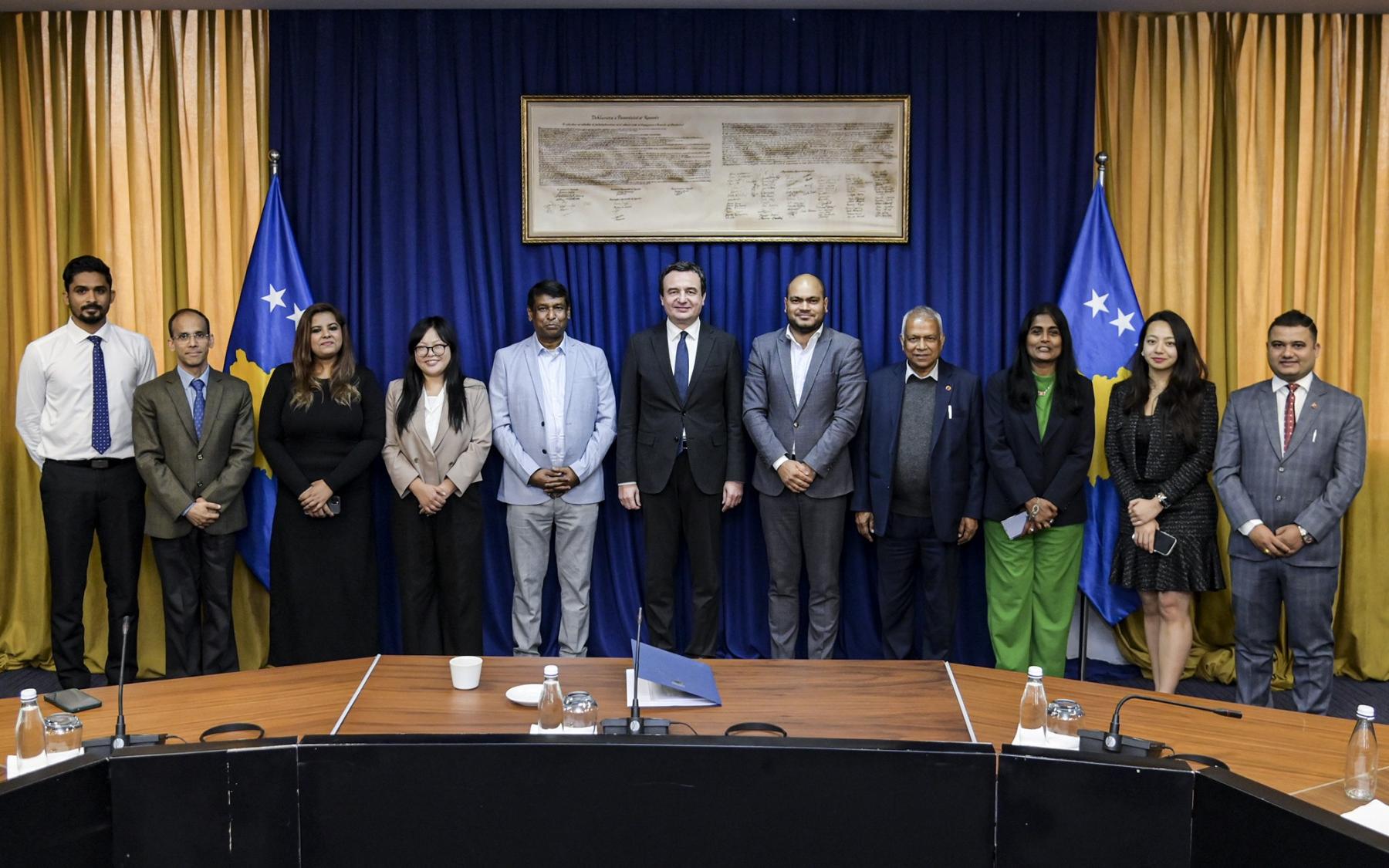
The academic strengths of both countries complement each other naturally. Kosovo’s universities, particularly the University of Pristina, have built deep expertise in transitional justice, post-conflict governance, and European integration; fields shaped by lived experience. Nepali universities bring global recognition in climate resilience, sustainable mountain development, and disaster risk reduction. Regional think tanks such as the Asian Institute of Diplomacy and International Affairs (AIDIA) have already demonstrated how cross-regional MoUs can work in practice, drawing lessons from partnerships with institutions like ADA University. Together, Nepal and Kosovo could nurture a new generation of policymakers and scholars genuinely invested in a Balkans-Himalayas partnership.
Technology adds another layer of promise. Pristina has quietly positioned itself as an emerging tech hub in the Balkans, exporting ICT services and supporting startups through initiatives such as the World Bank-backed Kosovo Digital Economy (KODE) project. Innovation Centre Kosovo (ICK) alone has helped hundreds of startups grow, mobilized millions in funding, and created thousands of jobs. In Kathmandu, a parallel story is unfolding; an energetic IT services sector powered by skilled, English-speaking youth working with North American and European firms. Joint ventures in software, cybersecurity, artificial intelligence (AI) for agriculture, and digital public services are natural meeting points.
During his visit to Kathmandu in December 2025, Lulzim Pllana pointed to something simple yet powerful: sharing everyday digital governance tools, from online bill payments to ICT-driven administrative systems. Building joint incubation frameworks between tech hubs in Pristina and Kathmandu could turn that idea into reality. Such a digital corridor would blend South Asia’s scale and talent with the Balkans’ access to European tech ecosystems, proof that cooperation, when rooted in people and institutions, can travel far beyond geography.
The Pristina Dialogue and Track II Diplomacy
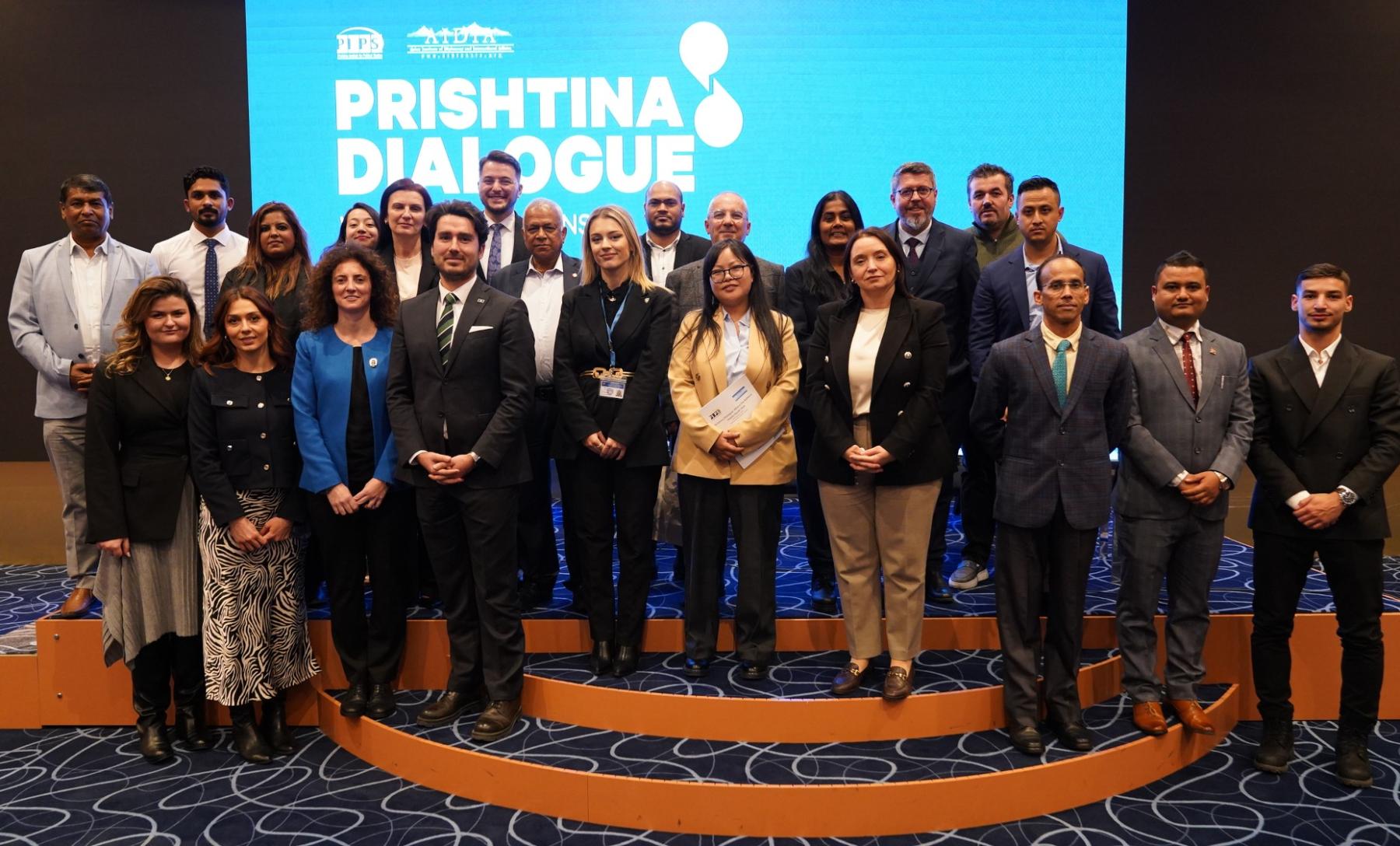
The idea behind the Pristina Dialogue: Where the Balkans Meet South Asia, developed by the Asian Institute of Diplomacy and International Affairs (AIDIA), marks an important step in building cross-regional understanding beyond official channels. At its core, Track II diplomacy creates space for academics, business leaders, former diplomats, and civil society voices to engage informally; testing ideas, sharing experiences, and exploring policy options without the rigid boundaries of state-to-state negotiations.
Such platforms matter because they put people before protocols. By encouraging direct interaction among professionals and private-sector actors, the Pristina Dialogue helps humanize distant regions and uncover practical areas of cooperation that formal diplomacy often overlooks. Experience from similar Track II initiatives shows that sustained engagement can gradually reshape public narratives, influence academic thinking, and prepare policymakers to consider new strategic alignments when official talks eventually follow.
Institutionalizing the Pristina Dialogue as an annual forum – anchored in Pristina but open to rotating participation – would give this initiative lasting depth. Over time, it could evolve into a trusted convening space where ideas mature into partnerships, and where relationships built quietly among individuals begin to inform louder, more consequential decisions at the policy level.

De Facto Cooperation Before De Jure Formalities
The long-term outlook for Kosovo’s engagement with Nepal is shaped by cautious optimism, grounded not in idealism, but in a clear-eyed reading of geopolitical realities. That tone was reflected in February 2026, when Vjosa Osmani met with US Secretary of State Marco Rubio, who reaffirmed the international community’s willingness to work with Kosovo’s new government to advance peace, stability, and shared economic growth. For Pristina, that message carries weight but it also calls for a broader, more global perspective.
Formal diplomatic recognition by Kathmandu remains entangled in international legal interpretations and Nepal’s own strategic calculations. Yet history shows that meaningful relationships do not always begin with signatures and flags. Economic ties, academic exchange, technology partnerships, and civil society cooperation can grow quietly, creating trust and shared interests long before formalities are resolved. In this sense, the absence of de jure recognition need not block de facto cooperation.
For Kosovo, a thoughtful South Asia strategy – centered on trade, technology, climate collaboration, and sustained dialogue – offers a way forward. By building practical interdependencies first, Pristina can allow substance to lead symbolism. Taking Nepal seriously is not merely a diplomatic gesture; it is a strategic investment in a South Asian market of nearly two billion people. More than anything, it is a statement that Kosovo’s economic ambition and global relevance extend well beyond the limits of contested borders, shaped instead by confidence, patience, and purposeful engagement.
Conclusion
For Pristina, engaging with a South Asian partner like Nepal is more than diplomacy, it is a tangible affirmation of Kosovo’s international agency, a way to navigate geopolitical constraints through real economic and social ties. For Kathmandu, leveraging Kosovo as a European economic gateway represents pragmatic hedging, reducing overreliance on immediate neighbors while opening pathways into new markets. By focusing first on functional interdependencies – such as labor mobility, SME trade, and people-to-people exchange – both nations can reap meaningful benefits even as formal recognition evolves at a measured pace.
The potential of a Nepal-Kosovo partnership is defined not by the miles between them, but by striking structural parallels and shared developmental ambitions. Both are young, resilient, landlocked countries striving to shift toward innovation-driven, diversified economies in a world of increasing fragmentation. Importantly, their relationship begins as a blank slate, untouched by historical grievances, territorial disputes, or inherited geopolitical burdens.
Together, Kathmandu and Pristina have the opportunity to build a South Asia-Western Balkans corridor that is practical, people-centered, and economically vibrant. Through cooperation in labor migration, tourism, Track II dialogues, and academic exchange, this Balkans-Himalayas corridor could emerge as a model for small-state collaboration, demonstrating that thoughtful economic statecraft and pragmatic multilateralism can reshape connectivity.
Originally published in the Daily Sun.